Eclectic

Newton's Views on Science and Theology

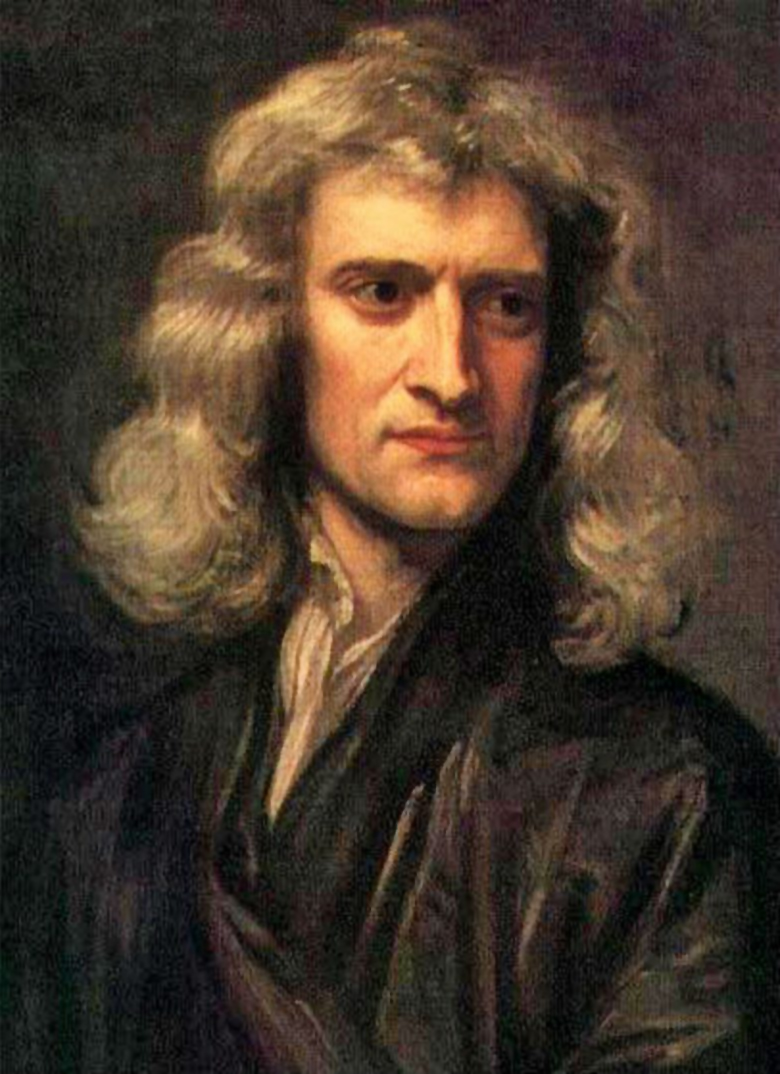
For the second edition of his Principia in 1713 Newton wrote an essay known as the General Scolium (introduction) in which he defends his views on several scientific and theological questions. There is an English translation of the expanded version from the third edition.

In this essay he hints at his theological views which during his lifetime were only shared in private. A few were published after his death, but the vast majority of Newton’s papers on all subjects except physics became available for scholarly study only in the middle of the 20th century, more than 200 years after his death.

His discussion of the meaning of the word “god” is considered a subtle dig at Trinitarianism. He argues that “god” is a title, not an intrinsic attribute of any person. A God exists when a superhuman being has a dominion. What he does not make explicit is his subordinationist christology: that Jesus, though “God”, is God only in the relative sense that he is a superhuman being and rules over a domain. But in Newton’s view this does not make him the Supreme Being or True God of monotheism because his domain is delegated to him. (He did make this understanding explicit in his unpublished writings.)

He goes on to argue that there is a supreme God who exists by necessity and has always existed. He sees the supreme God as a non corporal being, without a body or physical location. If this concept is impossible to understand, it is only because it is totally alien to human experience.


Continue reading…

Institutional Memory

Knowledge is a slippery thing. If we don’t take care we can lose it. Organizations loose it when members leave or retire without passing it on to their replacements. Suddenly the organization does not know how to do part of its job and has to spend time and money finding out again. Sure, sometimes new blood brings fresh ideas which work better, but more often the organization just makes painful mistakes until the lost experience can be regained.

Human societies experience the loss of Institutional Memory when one generation fails to pass enough of what it has learned on to the next.

Continue reading…

Fire Dogs

Sitting dog looks upwards seeking approval. Before him on the grounds is a large doll.

The following story is from Lev Tolstoy’s First Russian Reader of 1875. This is my translation. As far as I know it has never before appeared in English.

Fire Dogs

A True Story

It often happens that when there is a fire in a city that children remain in the house and it is impossible to pull them out because they hide in fright and do not make a sound while the smoke makes it impossible to see them. In London they train dogs for this purpose. These dogs live with the firemen and when a house catches fire the firemen send the dogs to pull the children out. One such dog in London has saved twelve children. He is called Bob. Once a house caught fire and when the firemen arrived at the house a woman ran out to meet them. She was weaping and saying that a two-year-old little maiden remained in the house. The firemen sent Bob. Bob ran up the stair/ladder and disappeared in the smoke. Five minutes later he ran out of the house and in his teeth he bore the little maid by her shirt. The mother threw herself upon her daughter and wept with joy that her daughter was alive. The firemen petted the dog and examined him to make sure he was not singed, but Bob strove vigorously to reenter the house. The firemen thought that there must still be something alive in the house and let him go. The dog ran into the house and soon came out with something in his teeth. When the people were able to see what it was the he carried all laughed heartily for he carried a large doll.

Continue reading…

Electrical Power and Power Loss

Water tank with closed outlet represents voltage. Tank with open outlet represents
    current. Narrow pipe represents more resistance than wide pipe.

Basic Electrical Units

A volt is a unit of electrical potential. Electrical potential in turn is the force which a power source (such as a battery) applies to a connected device in order to push electrons through it. Electrical potential (voltage) is comperable to the presure which a pump applies to a plumbing system in order to push water through the pipes.

Continue reading…

Communicating Clearly About Computing

Those of use who work in IT are frequently called upon to explain our work to people who are less familiar with computers than we are. It should be our goal to speak and write as clearly as possible. To do that we must avoid jargon, slang and expressions which are easily misunderstood. We should not write to be understood. We should write so as not to be misunderstood.

Continue reading…