Words Without Burden: The Cosmonaut Ludmila Recording And Its Misinterpretation
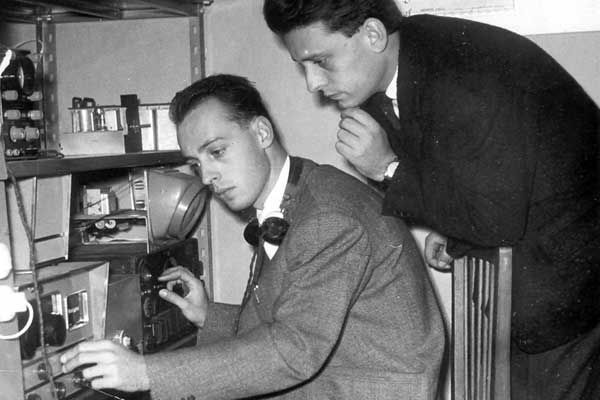
The so-called Cosmonaut Ludmila recording is of a series of radio transmissions intercepted by the Judica-Cordiglia brothers in May of 1961 on a channel which they believed was used by the Soviet space program. They interpreted the utterances as a distress call from a Soviet female astronaut reporting an onboard fire. Since no corresponding Soviet space mission has ever been identified, it is now widely supposed that the recording is a clumsy hoax. We carefully transcribe the recording and find that it contains no references at all to space flight, only nondescript utterances interspersed with childish patter and frivolous remarks about the heat in the radio operator’s workspace.
During the 1960’s two Italian radio amateurs, the brothers brothers Achille and Gian Battista Judica-Cordiglia, monitored radio transmissions which they believed were connected with Soviet space missions. They did this using home-built antennas and surplus US military gear. They also recruited other radio amateurs to form a worldwide listening network recruited. In several cases they believed that the transmissions they intercepted indicated that Soviet astronautsi had died due to accidents during flight.
According to the website Lost Cosmonautsii, one of the missions they monitored began with a launch on May 16th, 1961 and ended when the ship burned up on reentry on May 23rd. Their conclusion that the mission ended in loss of life is based primarily on a series of transmissions which they recorded in which a female voice supposedly reports rising temperatures and an onboard fire. The article on the Lost Cosmonauts site includes an audio recording of the transmission and a transcript translated into English.iii Though the transmission was reportedly intercepted on May 23rd, 1961, the first known public report of seems to be from the Italian newspaper Corriere della Sera in March 1965.iv
During the last few years this recording has attracted considerable attention on the Internet. It has been the subject of numerous blog postings, Youtube videos, podcasts, at least one short filmv, and a new interview with the the surviving Judica-Cordiglia brother.vi Frequently the recording is sensationalized, often with the aid of editing, dramatic images and moving music.vii However, there is little evidence that a manned Soviet space flight took place in May of 1961 and no other ground station is known to have received distress calls.viii This has led some to suggest that the recording is a hoax and that the speaker may be the brothers’ sister Maria Theresa who, as the Reader’s Digest reported, had been learning Russian.ix
Though there is little evidence that “Cosmonaut Ludmila”x ever existed, it does not necessarily follow that the recording is a hoax. It is perfectly possible that the Judica-Cordiglia brothers were simply mistaken in believing that it contains a distress call from space. Because it is in a language few in the West understand and the recording is so noisy that even native Russian speakers cannot understand it with ordinary effort, the question of what is actually said in it has been insufficiently explored.
Below we describe our attempt to produce a high-quality transcript of this recording in order to determine its true nature. Though we were unable to specifically identify the speaker and the activity in which she was participating, the results obtained strongly suggest that she is neither an astronaut nor a participant in a hoax.
General Characteristics of the Recording
The recording is just short of two minutes 34 seconds long. It was originally posted to Lost Cosmonauts as a Realaudio file named “cosmo.ra”. The file has a bit depth of 32, a sample rate of 11025 hertz and uses the “dnet” (Dolby AC3) codec. It is 308,956 bytes long.
Only one voice is heard, that of of female speaker. The loud background hiss and moderate distortion make it very difficult to understand what she says. The speaker seems to be interacting with an unheard second party. (Which is not unusual in interceptions of two-way radio communications.) Most of her utterances are short, and some of them are repeated many times. Most listeners familiar with Russian can pick out the phrases “I’m hot.” and “I see a flame.” and some numbers, but beyond that listeners, including native Russian speakers, are hard put to extract any coherent message from the recording.
For example, on June 16, 2009, a user on an online forum posted a link to Brian Dunning’s copy of the recordingxi and asked other members to try to transcribe it. She did not tell them what the recording was supposed to be. One of the better responses was:
At first I couldn’t even understand what language this was. Then I managed to catch some kind of digits: 32, 41, 1-2-3-4-5, 50. And then individual words such as “yes, yes, yes”, “so”, “speak”, and then something that sounded like “was transmitted” or was it “transmission”?xii Then something nasally which I interpreted as “I’m hot, I’m hot!” though that doesn’t make any sense.xiii
Another user believed she heard frivolous utterances in the recording and summarized it as follows:
1, 2, 3, 4, 5 Ready or not, here I come! And a whole pile of children’s rhymes and counting at the end.xiv
The recording piqued the curiosity of the forum members who asked her to tell them what it was. The original poster responded:
Thanks to everyone who listened to the recording. There really isn’t anything to tell. They asked me to listen to this recording and translate it. But I hear in this recording “don’t give up” instead of “I’m hot”. And there is the word “transmission”, “to the left”, “to the left flank”, and a whole bunch of digits. I got the impression that the woman is guiding someone, like she is giving coordinates at sea or something. How can I translate this if everyone hears something different?xv
So we see that native Russian speakers struggle to understand the recording, not just because it is noisy and distorted, but also because the utterances seem disjointed. It is particularly interesting that none of the forum participants heard references to space flight and one even reported children’s rhymes. We will return to both these points later.
The Widely-Circulated Translation
Lost Cosmonauts provides the following English translation of the recording:xvi
five...four...three ...two...one...one
two...three...four...five…
come in... come in... come in…
LISTEN...LISTEN! ...COME IN!
COME IN... COME IN... TALK TO ME!
TALK TO ME!... I AM HOT!... I AM HOT!
WHAT?... FORTYFIVE?... WHAT?…
FORTYFIVE?... FIFTY?…
YES...YES...YES... BREATHING…
BREATHING... OXYGEN…
OXYGEN... I AM HOT... (THIS)
ISN'T THIS DANGEROUS?... IT'S ALL…
ISN'T THIS DANGEROUS?... IT'S ALL…
YES...YES...YES... HOW IS THIS?
WHAT?... TALK TO ME!... HOW SHOULD I
TRANSMIT? YES...YES...YES…
WHAT? OUR TRANSMISSION BEGINS NOW…
FORTYONE... THIS WAY... OUR
TRANSMISSION BEGINS NOW…
FORTYONE... THIS WAY... OUR
TRANSMISSION BEGINS NOW…
FORTYONE... YES... I FEEL HOT…
I FEEL HOT... IT'S ALL... IT'S HOT…
I FEEL HOT... I FEEL HOT... I FEEL HOT…
... I CAN SEE A FLAME!... WHAT?…
I CAN SEE A FLAME!... I CAN SEE A
FLAME!…
I FEEL HOT... I FEEL HOT... THIRTYTWO…
THIRTYTWO... FORTYONE... FORTYONE
AM I GOING TO CRASH?... YES...YES... I FEEL HOT!…
I FEEL HOT!... I WILL REENTER!... I WILL REENTER…
I AM LISTENING!... I FEEL HOT!…
In our discussion which follows we shall refer to this as the Lost Cosmonauts Translation. The text as presented in this translation does in some ways resembles a clumsy fake. We can imagine someone taking a smattering of space flight terminology from a dictionary and padded it out with a jumble of short sentences from a phrasebook. However, the transcription and translation we propose in this article differ in important ways which we believe make such an explanation unlikely.
Expectations
When we began our investigation we expected to identify the recording as one of the following:
- A plausibly worded and voiced distress call from space. Determining whether the speaker of such a message was an astronaut or a competent actor portraying one would be beyond the scope of our investigation.
- A intelligible message framed as a distress call from space but containing errors of grammar, usage, and pronunciation sufficient to identify the speaker as a language learner attempting a hoax.
- A cruder hoax consisting of an incoherent jumble of words and phrases pulled from dictionaries and phrasebooks and covered with noise in an attempt to suggest a distress call which the hoaxer lacked the skills to compose.
- A genuine radio message containing a genuine distress call but not from space.
- Some other kind of radio message misidentified as a distress call.
Our Transcription Method
To attack the problem we started by cleaning up the audio as much as possible. We loaded the file into Audacityxvii, an audio editor, and applied a digital filter to remove background noise. This dramatically improved intelligibility. We then used the selection tool to choose each utterance in turn and listen to it repeatedly until we understood it before moving on to the next utterance.
We found this word-by-word approach necessary because, as will become clear below, Ludmila’s remarks are either arbitrary and eccentric or divorced of context because we cannot hear the other operator. This makes it extremely difficult to transcribe the words in the correct order when listening to the recording straight through. Only by playing the recording a little at a time were we able to avoid unconsciously reordering her utterances.xviii
The Transcript
| Time | Transcript | Translation |
|
00:01.183 to 00:14.931 |
Пять, четыре, три, два, [?]! Один, два, три, четыре, пять! Арин, арин, арин! Слушайте, слушайте! Брум, брум, брум! Говорите, говорите! |
Five, four, three, two, [?]! One, two, three, four, five! Arean, arean, arean! Hear, hear! Broom! broom! Speak, speak! |
Seemingly Lyumila is calling another station. But the format she is using is more complicated and theatrical than any real radio call procedure we were able to discover. The words “arean” and “broom” appear to be nonsense sounds chosen only as a way to attract attention.
The use of the imperative verbs “Hear, hear!” and “Speak, speak!” is perfectly proper Russian. It is not archaic, rude, or reflective of urgency as it might be in English.
| Time | Transcript | Translation |
| 00:15.278 to 00:17.396 | Мне жарко, мне жарко! | I’m hot, I’m hot! |
| 00:18.704 to 00:21.640 | Под сорок пять, под сорок пять! | It’s like 45, it’s like 45! |
| 00:22.636 to 00:24.024 | Четыре, пять! | Four, five! |
This utterance can be translated as “It’s hot!” or “I’m hot!”. Literally she says “To me it is hot.” This is the standard phrase used by Russians to report their perception of the air temperature. Less than half a second later she follows this with a statement that it is “coming up on 45”, presumably 45 degrees Celsius (113 Fahrenheit).
There is then a one-second pause after which she says “Four, five”, repeating 45 as separate digits presumably because the unheard radio operator at the other end did not understand.
| Time | Transcript | Translation |
| 00:26.961 to 00:28.064 | Так, да, да. | Right, yes, yes. |
In a business-like tone she acknowledges something the other operator said during the three-second pause immediately proceeding this utterance.
| Time | Transcript | Translation |
| 00:29.443 to 00:32.255 | Дыхание! Дыхание! | Breathing! Breathing! |
| 00:33.269 to 00:35.619 | Дыхание! Дыхание! | Breathing! Breathing! |
| 00:39.000 to 00:40.272 | Мне жарко! | I’m hot! |
At the point where she repeats “Breathing, breathing!” the Lost Cosmonauts Translation has “Oxygen, oxygen!” instead. This is strange since dy-KHAN-iye (breathing) sounds nothing like kis-la-ROD (oxygen).
Ludmila’s utterance makes most sense if we suppose that the other operator asked “What is the problem?” Breathing is the problem. Of course astronauts do not impart important information using such terse and ambiguous utterances. They are trained to express themselves clearly in complete thoughts such as “The high temperature is making breathing difficult.”
Her report of breathing difficulties seems to alarm the other operator as seen by the fact that after a four-second pause she reassures him:
| Time | Transcript | Translation |
| 00:44.285 to 00:45.913 | Ничего опасного! | Nothing dangerous! |
| 00:47.284 to 00:48.004 | Все! | Let’s move on. (Literally: “all” as in “all done”) |
| 00:49.837 to 00:52.418 | Ничего опасного. Все! | Nothing dangerous, let’s move on! |
She says explicitly that she is not in actual danger. She is emphatic that she wants to drop the subject.
The Lost Cosmonauts Translation misrenders “Nothing dangerous!” as “Isn’t this dangerous?” and translates “all” without understanding of the idiom.
Ludmila is using highly idiomatic Russian with strong and correct intonation. Russian is either her native language or one she has been using in daily conversation for many years. There is absolutely no basis to the claim that her words are the garbled utterances of a beginner learning the language.
| Time | Transcript | Translation |
| 00:52.783 to 00:53.566 | Да, да, да! | Yes, yes, yes! |
She is back to business, attending to what the other operator is saying. For the rest of the recording she will switch back and forth between communicating normally with the other operator and an increasingly silly patter about the heat.
| Time | Transcript | Translation |
| 00:55.390 to 00:56.564 | Он слушает. | He is listening. |
She is telling the other operator that he may begin speaking his message because the man who is supposed to receive it is ready and listening. Presumably this man is standing next to Ludmila in the radio room. The Lost Cosmonauts translation omits this revealing utterance entirely.
| Time | Transcript | Translation |
| 00:57.276 to 00:57.872 | Как? | How’s that? |
She is asking for clarification of something said by the other operator.
| Time | Transcript | Translation |
| 00:59.456 to 01:00.542 | Говорите! | Speak! |
She is telling the other operator to go ahead.
| Time | Transcript | Translation |
| 01:03.131 to 01:04.884 | Как мне это передать? | How am I to deliver that? |
At Lost Cosmonauts this phrase is dubiously rendered “How shall I transmit?” as if she were asking for advice on to how to operate her radio. Instead she is almost certainly asking how to deliver a radio message which she has just taken down.
We do wonder when the other operator had time to speak his message. It is a consistent pattern that he gets very little time to speak. Could it be that this recording has been edited to remove uninteresting silences?
| Time | Transcript | Translation |
| 01:05.338 to 01:06.548 | Да, да, да! | Yes, yes, yes! |
| 01:08.096 to 01:08.657 | Так. | Yup. |
Here she is simply responding to something the other operator has said.
| Time | Transcript | Translation |
| 01:10.801 to 01:14.983 | Четыре двадцать будет [?] два сорок [?]. | Four twenty will be [?] two forty [?]. |
| 01:16.638 to 01:21.354 | Вот, так наша передача будет четыре сорок один. | Yeah, so our transmission will be four forty one. |
| 01:22.101 to 01:25.776 | Так, наша передача будет четыре сорок один. | So, our transmission will be four forty one. |
| 01:26.399 to 01:27.022 | Так. | Yup. |
This part is particularly difficult to understand and interpret. She may be talking about the times at which future radio contact will take place.
| Time | Transcript | Translation |
| 01:27.422 to 01:29.620 | Мне жарко, мне жарко. | It’s hot, it’s hot. |
| 01:30.270 to 01:31.845 | Все, все! | Never mind, never mind. |
| 01:32.797 to 01:35.982 | Мне жарко, мне жарко, мне жарко. | I’m hot, I’m hot, I’m hot. |
| 01:36.080 to 01:39.817 | Лекарства! Лекарства, мне жарко! | Medicine! Medicine, I’m hot. |
She has restarted her patter about the heat. Now in a sing-song voice she begins playing with the word le-karst-va (medicine) which sounds similar to mnye zhar-ka (I’m hot.). In the Lost Cosmonauts translation her demand for medicine (presumably for an imaginary fever) is misheard as additional repetitions of “I’m hot!”.
| Time | Transcript | Translation |
| 01:40.422 to 01:41.428 | Я вижу... | I see... |
| 01:43.110 to 01:44.160 | пламя! | a flame! |
| 01:48.235 to 01:48.920 | Как? | What? |
| 01:52.924 to 01:55.887 | Я вижу пламя! Я вижу пламя! | I see a flame! I see a flame! |
| 01:56.047 to 01:58.298 | Мне жарко, мне жарко! | I’m hot, I’m hot. |
This is the point to which she supposedly reports that the capsule is burning up. “I see a flame!” is one of the clearer utterances in the recording and Russian speakers can generally pick it out without too much trouble. In online forums they frequently object that the phrase “I see a flame!” is very rare, perhaps archaic, and certainly not what one would say to report that one’s space capsule is burning. They take this as evidence that the recording is a clumsy hoax created by someone with a poor understanding of Russian. But this argument assumes that these words really are framed as part of a distress call from space and that we need only determine whether it is real or fictional.
The delivery of this line is very interesting. Notice the two-second pause between “I see…” and “a flame!”. This, together with her exaggerated tone, suggest that she is aiming for maximum dramatic effect. Significantly her utterance seems to confuse the other operator. There is a four-second silence during which he presumably asks for clarification, she in turn asks what he said, there is another four-second pause, and she repeats her utterance twice for his benefit. Then she repeats that she is hot.
For a while we considered the possibility that she is reporting that she has sighted some kind of torch, perhaps one used to burn off natural gas from an oil field or as a signal. But this seems unlikely. We eventually concluded that this is just part of her silly patter.
As already mentioned, a number of Russians online have objected to this expression calling it archaic, poetic, or at least not a term we would expect an astronaut to use. A search of the World Wide Web confirms that its use is overwhelmingly in song, poetry, and dramatic speeches. For example, in Leonid Andreev’s 1906 play Savvaxix the title character, seemingly in the grip of madness, responds to the sound of a distant bell with these impassioned words:
| Ага! Зазвонили!! Звоните, звоните! Скоро зазвонит вся земля. Я слышу!.. Я слышу! Я вижу, как горят ваши города. Я вижу пламя! Я слышу треск! Я вижу, как валятся на голову дома! Бежать некуда... Спасенья нет. Спасенья нет! Огонь везде! Горят церкви, горят фабрики — лопаются котлы. Конец рабьему труду! | Aha! They have rung! Ring, ring! Soon all the earth will ring. I hear! I hear! I see how our cities burn. I see the flame! I hear the crackle! I see how the houses come down about our heads! Nowhere to flee… No salvation. No salvation! Fire everywhere! The churches burn, the factories burn, the boilers burst. The end of slavish labor! |
Whether or not Ludmila’s outburst is inspired by this or any other literary work, her report that she sees a flame is melodramatic in wording and tone and immediately proceeded and followed by silly remarks about the heat. Under such circumstances we are not entitled to assume that she is referring to an actual fire.
| Time | Transcript | Translation |
| 01:58.752 to 02:00.158 | Тридцать двадцать | Thirty twenty |
| 02:01.439 to 02:02.552 | Тридцать два | Thirty two |
| 02:05.737 to 02:07.855 | Сорок один, сорок один. | Forty one, forty one |
| 02:08.691 to 02:10.907 | Алло! Алло! А-да! | Hello, hello! O yeah! |
And she is back to work again. She seems to be repeating some numbers which the other operator is dictating. Perhaps they are part of a message and she wants to make sure she gets them right.
Her “hello, hello” probably means that she thinks they have lost contact. It is what Russians say during telephone conversations when the other party stops responding. The Lost Cosmonauts translation has “Am I going to crash?” instead of “Hello, hello! O yeah!”. This is an extraordinary example of mishearing.
| Time | Transcript | Translation |
| 02:14.688 to 02:16.993 | Мне жарко, лекарство. | I’m hot, medicine. |
| 02:21.166 to 02:22.741 | Ло, лохо. | Lo, lokho. |
And Ludmila is back to her silly patter. She throws in a few nonsense words for good measure.
| Time | Transcript | Translation |
| 02:23.480 to 02:24.200 | Но, но, но | Yeah, yeah, yeah. |
| 02:25.428 to 02:26.665 | Я слушаю! | I am listening! |
And now she is back to work.
| Time | Transcript | Translation |
| 02:27.786 to 02:29.165 | Лекарство! | Medicine! |
And more of the silly patter. The recording ends five seconds after this utterance.
Observations Drawn from Our Transcript
On the basis of our transcript we can reject both the theory that Ludmila is a doomed astronaut and the theory that she is a hoaxer pretending to be a doomed astronaut. The recording contains absolutely no reference to the spaceflight concepts, activities, or equipment which figure so largely in real space communications. In particular, and contrary to what is found in the Lost Cosmonauts translation, there is no reference of oxygen, to reentry, or a possible crash. Whatever the subject matter is, it is not space flight, so it is incoherent to suggest that it is a fake space flight recording.
We are unable to determine the true identity of “Ludmila” or her workplace. We can however make a few relevant observations. The woman seems to be working as a radio operator. Her words suggest that there is a man with her waiting to receive a message, so she is likely in a radio room. Judging from her complaints, it is very hot in this radio room. She must have a very relaxed work environment since she feels free to keep up a steady stream of childish whining complaint and joking about the temperature.
We also think it likely that this recording has been edited to remove long silences when Ludmila is listening to the other operator whom we cannot hear. If he is dictating radiograms and she is speaking only to confirm some numerical details and delivery instructions that goes a long way to explaining why there is almost no comprehensible message in the recording other than her complaints about the heat.
Comparison With Soviet Spaceflight Audio
As if it were truly necessary to show that the recording described above bears no resemblance to spaceflight communications, here is a translation of the transcript of the first five minutes of audio from Yuri Gagarin’s flight on Vostok I on April 12, 1961.xx “Cedar” is Gagarin, “Dawn 1” is ground control:
Dawn 1: Ignition start…
Cedar: Acknowledged. Ignition start.
Dawn 1: Initial stage… Middle stage… Main… Liftoff!
Cedar: We’re off! The noise is slightly audible in the cabin. Everything is proceeding normally. I feel fine, I am alert, all is normal.
Dawn 1: We all wish you a good flight, everything is normal!
Cedar: Goodbye, may we meet again soon, good friends!
Dawn 1: Goodbye, may we meet again soon!
Cedar: Vibration is increasing, the noise is somewhat increased…
Dawn 1: Time 70.
Cedar: Understood. 70. I am feeling fine, continuing flight, g-forces are increasing, all good.
Dawn 1: 100. How do you feel?
Cedar: I am feeling fine. What about you?
Dawn 1: Time and speed are normal. How do you feel?
Cedar: I feel fine…
Dawn 1: Everything is in order. The machine is working well.
Cedar: [unintelligible]
Dawn 1: The nose cone has been ejected. Everything is normal. How do you feel?
Cedar: Main fairing ejected… I see the Earth… G-forces are increasing somewhat. I am feeling great. I am alert.
Dawn 1: Good for you! Everything is going well.
Cedar: I am watching the clouds, the landing site. It is beautiful, such beauty! How well are you hearing me?
Dawn 1: We hear you fine. Continue the flight.
Cedar: Flight is continuing well, g-forces increase, slow rotation, everything is born well, the g-forces are not large, I feel fine. I am observing the Earth through the navigation porthole. Everything is getting obscured by clouds.
Dawn 1: The flight is going normally. We understand you, we hear you fine.
Cedar: Second-stage shutdown has occurred.
Dawn 1: The right things are running. Final state. Everything is normal.
Cedar: I heard it start. I feel fine. I am observing the Earth. Visibility is excellent. I am alert, g-forces are increasing, I feel fine.
Unlike Ludmila who multiplies banal and irrelevant utterances seemingly for the pleasure of hearing herself talk, Gagarin and ground control speak as persons who have something to say and understand the importance of being clearly understood. Almost every utterance can be understood in isolation and just a few sentences are sufficient for us to understand that the subject is a space flight in progress.
Source of the Judica-Cordiglia Brother’s Translation
Why then did the Judica-Cordiglia brothers believe that the recording contains a distress call from a space capsule? First of all, because they were attempting to intercept messages from space. We do not know exactly when they recorded this message or at what frequency, but presumably it was at or near a frequency on which they had heard Soviet space communications before. This created an expectation that the message would be from space and a subsequent tendency to read a message about space flight into it.
The Lost Cosmonauts translation is the work of an unqualified person. The translator understood that Ludmila says numbers, says it is hot and difficult to breath, says something about danger, and says she sees a flame. But at the same time the translator seems to be unfamiliar with the basic conversational idioms Ludmila employs. Thus her “Nothing dangerous!” becomes the anxious “Is it dangerous?” and her use of “Vsyo!” to cut off discussion of her complaints about the heat is misinterpreted. Statements which do not make sense in the context of the brothers’ assumptions such as “He is listening.” are missed while other mundane words are misheard as references to space flight concepts such as “reenter” and “crash”.
Conclusion
We conclude that the woman heard in this recording is not on a space ship and is not pretending to be. Thus she cannot be a participant in any lost cosmonauts hoax. While the Judica-Cordiglia brothers probably did not set out to deceive the public with this recording, their expectations, aided by the incompetence of their translator, imposed a space narrative on the melodramatic and frivolous utterances of a bored and silly radio operator.
-
i
We have made a stylistic choice to use the English word when talking about Soviet space travelers.
-
ii
The address of Lost Cosmonauts was originally lostcosmonauts.com, but (based on the archives of the Wayback machine) it disappeared in early 2013 and reappeared at lostcosmonauts.net in late 2015.
-
iii
Schrock, John. “The First Woman in Space.” Lost Cosmonauts, November 14, 2019, https://www.lostcosmonauts.net/wom.htm.
-
iv
Scott, Jeff. “Lost Cosmonaut Rumors”, Aerospaceweb.org, July 3, 2005, https://aerospaceweb.org/question/conspiracy/q0235.shtml.
-
v
Veske, Miryam and Bremdal-Vinell, Nils. “Kosmonauta.”, September 15, 2014, https://vimeo.com/106216724.
-
vi
“Mystery of the Lost Cosmonauts.” Extremes Podcast, March 24, 2020, https://www.youtube.com/watch?v=RZidFWLrLnU.
-
vii
Scott, Joe. “The Mysterious ‘Lost Cosmonaut’ Recording.” March 7, 2019, https://www.youtube.com/watch?v=RZidFWLrLnU.
-
viii
Dunning, Brian. “Search for the Missing Cosmonauts.” Skeptoid, August 19, 2008, https://skeptoid.com/episodes/4115.
-
ix
“Lost Cosmonauts: Did Russia Lose the 1st Astronauts in Space?” Dark Docs, July 23, 2018, https://www.youtube.com/watch?v=u9dsMELHuTA.
-
x
As far as we can discover nobody has claimed that the woman heard in the recording is necessarily named Ludmila. It is simply a common Russian female name used as a placeholder.
-
xi
-
xii
The Russian words which the forum user thinks she may be hearing do not necessarily refer to a radio transmission. They can just as well refer to delivery of a message by other means or even delivery of a parcel.
-
xiii
Kangaroo, “Небольшой опрос.” Форум прекрасные кошки, June 16, 2009, https://www.catgallery.ru/forums/index.php?showtopic=9756.
-
xiv
Котозависимый, “Небольшой опрос.” Форум прекрасные кошки, June 16, 2009, https://www.catgallery.ru/forums/index.php?showtopic=9756.
-
xv
Kangaroo, “Небольшой опрос.” Форум прекрасные кошки, June 17, 2009, https://www.catgallery.ru/forums/index.php?showtopic=9756.
-
xvi
Schrock, John. “Traduzione Italiana [sic].” Lost Cosmonauts, November 14, 2019, https://www.lostcosmonauts.net/tradeng.htm.
-
xvii
-
xviii
The transcription and translation were performed by the author. Though not a native speaker of Russian, he has spoken it daily for two decades and has several years experience in shortwave listening.
-
xix
Andreev, Leonid. “Савва.” 1906, https://andreev.org.ru/biblio/Savva/p016.html.
-
xx
“Звездный рейс Юрия Гагарина.” Известия ЦК КПСС, 1991 №5, https://epizodsspace.airbase.ru/bibl/i_tsk/zv-reis.html.