Nessus in the Role of a Tease
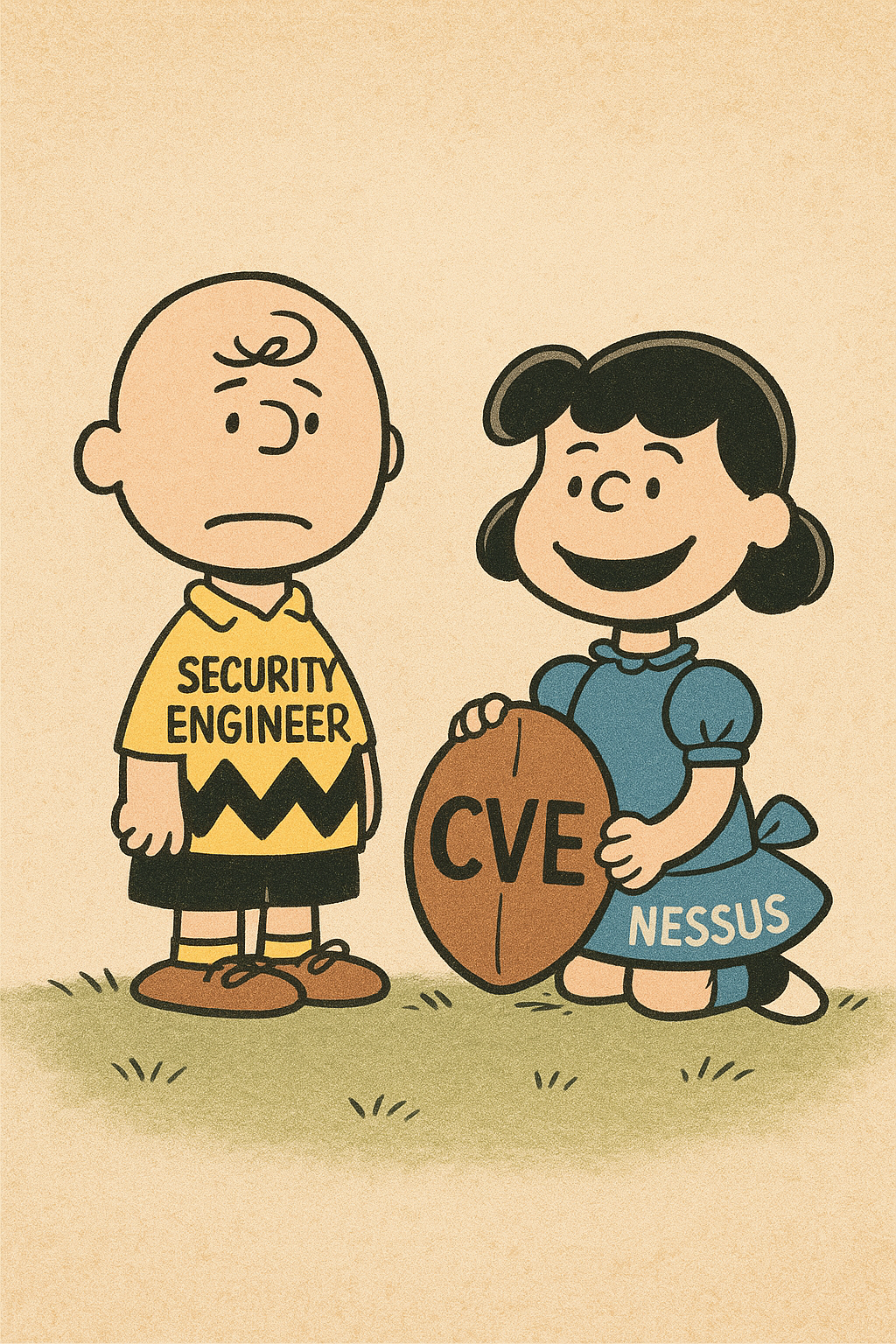
Nessus is a security scanner sold by a company called Tenable. It runs through a customer’s network checking to see whether the computers have any known defects which could undermine their security.
Normally this works well. Yes, sometimes the test plugins do not have access to full information and have to make assumptions which lead to false positives. But sometimes Tenable writes the test procedure incorrectly. This has happened three times in the last three weeks.
The Insecurity of Non-Existent Things
SNMP is a protocol which is used in network management. A central management computer can use this protocol to ask computers it is managing for information about their health such as how much disk space is free, or how high the CPU load is. SNMP was introduced decades ago when the Internet was a much friendlier place. As initially designed access to the SNMP monitoring agents required a password and the default password for read-only access was “public”.
Nessus looks for SNMP agents which still provide system information to anyone with the password “public”. This was good. But last month Nessus started falsely accusing computers of accepting “public” as the SNMP password. There was just one problem: these computers were not running SNMP agents at all. This was not a false positive. The result of the test was negative, but Nessus misreported it as a positive.
The effect of this was that around July 24th customers saw a huge jump in the number of their devices which supposedly had this problem, only for the problem to disappear a couple days later.
Not Watching the News
The next flock of erroneous vulnerability reports flew in from a different place: misinterpretation of a poorly-written message posted to the Debian security mailing list. This message was sent in connection with the release of Debian version 13. It announced an updated version of a spreadsheet which lists the Debian release and various dates related to their life cycle. The announcement said the updated spreadsheet was now available for installation on Debian version 11 as an update to a package called “distro-info-data”.
The problem was that the announcement of the updated spreadsheet included boilerplate text describing the updated spreadsheet as a “fix” for a “problem” and told users where to read about the “security status” of the distro-info-data package. Not entirely surprisingly, someone at Tenable interpreted this as an announcement of a security fix. More surprisingly they decided that the risk level was “high” despite the fact that no vulnerability was described and so there was no information on which to base a vulnerability assessment.
So the vulnerability reports which Nessus generated are nonsense. Debian 11 is under long-term support until August 2026. Until then it receives security patches. Nothing changed from a security perspective just because a new version of Debian was released in August 2025.
All Bugs are Old
The next problem due to allowing an assumption to take priority over the literal text of a vulnerability report. CVE-2025-54090 is described as a bug in version 2.4.64 of the Apache Web Server. The vulnerability report recommends upgrading to version 2.4.65.
The problem is that someone at Tenable assumed that this was an old bug which must be present in versions prior to 2.4.64. The report does not say that and it is not true. The bug was introduced into the code on July 7th, three days before version 2.4.64 released.
As a consequence of this misunderstanding Nessus started demanding that system administrators upgrade earlier versions such as 2.4.62 to 2.4.65 in order to fix this “high-risk” vulnerability which they never had.
Costs
Some may argue that more information is always better. I disagree. Nessus reports, particularly high-risk ones, must be taken seriously. But responding to them takes up enormous amounts of staff time. And a false report can take considerably more time to address than a true on. A real security defect can often be can be fixed quickly and crossed off the list. But a false reports requires investigation and considerable discussion until everyone involved is satisfied that it is indeed false. When the time of highly-skilled staff members is consumed so uselessly, it takes them away from activities which could actually improve security.